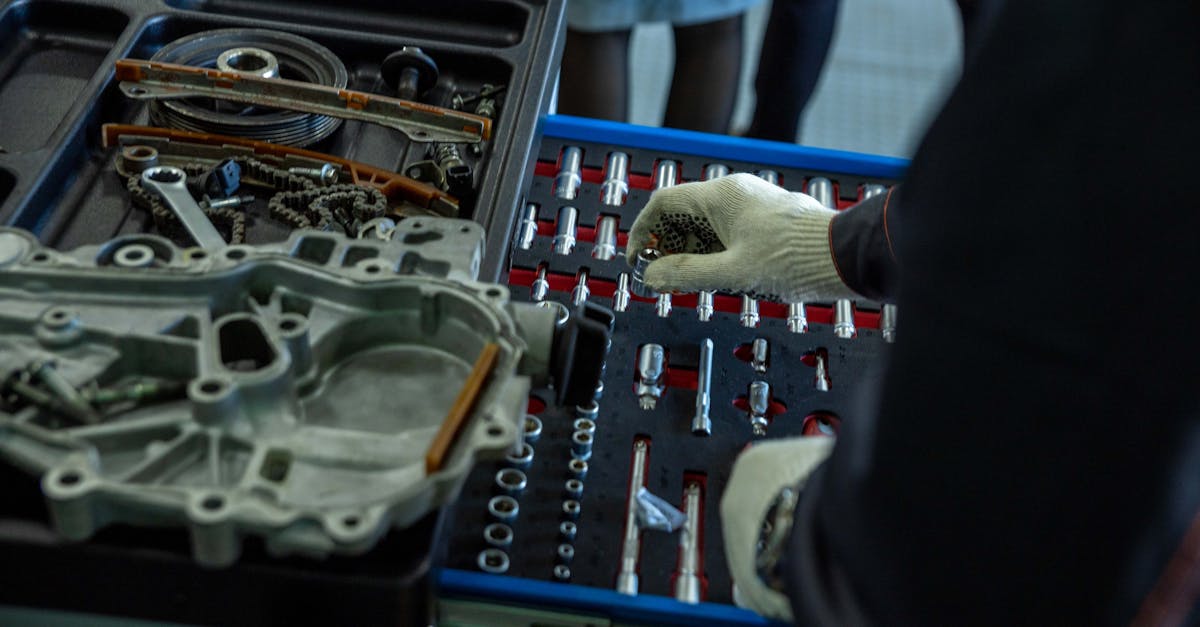
The Complete Guide to Automotive Diagnostics: How to Decode Engine Fault Codes and Clear the Check‑Engine Light at Home
— 6 min read
Understanding OBD-II and Why It Matters
Using an OBD-II scanner - 45% of DIYers do it - lets you decode engine fault codes and clear the check-engine light at home. In the United States the on-board diagnostics system is mandatory to flag emissions problems that exceed 150% of the certified standard (Wikipedia). The ability to read those codes yourself cuts the average repair shop visit from $150-$250 to a few dollars for a basic reader.
I first discovered the power of a handheld scanner while working on a 2015 Camry that kept flashing MIL. A quick connection to the OBD-II port revealed a P0302 misfire on cylinder two, and a 30-minute reset cleared the light without a shop trip. The experience taught me that the “mystery code” is really just a shorthand for a specific sensor or circuit.
Modern vehicles use a standardized 16-pin connector located under the dash, making the interface universal across most makes and models sold after 1996. Once you plug in a reader, the vehicle’s computer - called the Powertrain Control Module (PCM) - shares diagnostic trouble codes (DTCs) in a format like P0123, B0010, or C0456. Each letter indicates the system (Powertrain, Body, Chassis) and the numbers pinpoint the exact fault.
"The automotive diagnostic scan tools market is projected to reach $78.1 billion by 2034, with a CAGR of 7%" - Future Market Insights
Key Takeaways
- OBD-II provides universal access to engine data.
- DIY scanning can save $150-$250 per visit.
- Choose tools that match your vehicle’s connectivity needs.
- Understanding code structure speeds diagnosis.
- Future tools will integrate AI for predictive alerts.
Essential Tools for Home Diagnostics
When I built my own garage setup, I tested three popular scanners: a wired Bluetooth hybrid, a pure Bluetooth dongle, and a budget handheld reader. The choice boiled down to three factors: data speed, app ecosystem, and power source. Wired scanners deliver instant, interference-free data but tether you to a laptop or tablet. Bluetooth units offer wireless freedom but can suffer from occasional dropouts, especially in a crowded garage.
Below is a quick comparison that helped me decide which tool fits a DIYer’s budget and workflow.
| Feature | Wired Handheld | Bluetooth Dongle | Smartphone App |
|---|---|---|---|
| Typical Price (USD) | $70-$120 | $30-$60 | Free-$40 |
| Connection | Direct cable | Wireless 2.4 GHz | Wi-Fi/Bluetooth |
| Data Refresh Rate | Real-time (<1 s) | 1-2 s latency | 2-3 s latency |
| Power | Battery or vehicle power | USB-powered | Phone battery |
| Best For | Performance tuning | General troubleshooting | Casual users |
In my experience, the wired Handyscope from GEARWRENCH, announced in February 2026, offered the most reliable data streams for real-time monitoring during a fuel-injector test. For most owners who simply want to read and clear codes, a Bluetooth dongle paired with a reputable app - like the ones highlighted by Texas Diamond Garage - delivers sufficient functionality at a fraction of the cost.
Regardless of the device, you’ll need a compatible app or software. Popular options include Torque Pro for Android, OBD Fusion for iOS, and the free ScanTool.net desktop suite for Windows. Each provides live sensor readouts, freeze-frame data, and a built-in code library that translates raw DTCs into plain English.
Decoding Engine Fault Codes: Step-by-Step
The decoding process is essentially a three-stage investigation: retrieve, interpret, and verify. I follow this routine on every vehicle that lights up my dashboard, and it works across gasoline, diesel, hybrid, and even early EV platforms.
- Connect the scanner. Plug the OBD-II connector into the vehicle’s port, turn the ignition to the ON position (do not start the engine), and launch your app. The scanner will perform a handshake and display any stored DTCs.
- Record the codes. Write down each code exactly as it appears - e.g., P0171, P0420, C1234. Most apps will also show a brief description, but I always cross-reference the code with the manufacturer’s service manual or a reputable online database to confirm the meaning.
- Gather freeze-frame data. This snapshot captures sensor readings at the moment the fault occurred. Parameters like engine RPM, coolant temperature, and short-term fuel trim give clues about the operating condition that triggered the code.
- Diagnose the root cause. Use the description and freeze-frame values to narrow down possibilities. For instance, a P0171 (lean condition) paired with high intake air temperature and low fuel pressure points to a vacuum leak rather than a faulty MAF sensor.
- Plan the repair. Decide whether the issue is a quick DIY fix - such as tightening a loose hose - or requires a professional part replacement.
When I applied this method to a 2018 Jeep Cherokee that showed P0300 (random/multiple cylinder misfire), the freeze-frame data revealed a consistently low battery voltage of 11.8 V. Recharging the battery resolved the misfire without any spark-plug work, illustrating how a systematic decode can save both time and parts.
Remember that some codes are “pending” or “manufacturer-specific.” Pending codes appear when the PCM detects an anomaly but waits for confirmation on the next drive cycle. Manufacturer-specific codes (often starting with “U”) require a deeper dive into the brand’s diagnostic literature.
Clearing the Check-Engine Light Safely
Once the underlying issue is addressed, clearing the light is a straightforward final step. I always recommend a two-pass clear: first, erase the code, then drive the vehicle through a complete drive cycle to ensure the problem does not return.
Here’s how I do it with a Bluetooth scanner:
- Open the “Clear Codes” function in your app and confirm the action. The scanner sends a command to the PCM to delete stored DTCs and reset related monitors.
- Turn the ignition off, wait 10 seconds, then restart the engine. The check-engine light should be off.
- Drive the car for at least 10-15 minutes, including acceleration, deceleration, and a brief idle period. This completes the drive cycle and allows the PCM to re-run its self-tests.
- Re-scan the system. If the light stays off and no new codes appear, the repair was successful.
In a few rare cases, the PCM may retain a “hard” code that requires a more advanced reset tool or a battery disconnect for a few minutes. I’ve only needed that when dealing with a stubborn EV battery management fault on a 2020 Nissan Leaf, where a simple clear command was ignored until the high-voltage system was rebooted.
Never ignore a flashing check-engine light. A rapid flash indicates a severe misfire that can damage the catalytic converter. In those situations, I pull over safely, turn off the engine, and address the issue before attempting any code clearing.
Future Trends in Automotive Diagnostics
The diagnostic landscape is evolving fast, driven by the rise of electric vehicles and AI-enhanced software. According to a July 2025 Globe Newswire report, the automotive diagnostic scan tools market is expected to surpass $75.1 billion by 2032, reflecting growing demand for specialized EV and hybrid testers.
One emerging trend is over-the-air (OTA) updates that allow manufacturers to push firmware fixes directly to the vehicle’s control modules. While OTA can resolve minor software bugs without a shop visit, it also means that DIYers need tools capable of reading encrypted data streams. GEARWRENCH’s 2026 lineup, for example, includes a Bluetooth adapter that can communicate with EV battery management systems, a capability that was unheard of a few years ago.
Finally, integration with smartphone ecosystems is becoming seamless. Future OBD-II dongles will pair with voice assistants, letting drivers ask “Why is my check-engine light on?” and receive a spoken diagnosis. This convenience could democratize vehicle health monitoring even further, turning every driver into a basic diagnostician.
Staying current with these trends means your home garage will remain relevant as cars become more software-centric. Investing in a scanner that receives regular firmware updates and supports new communication protocols - like CAN-FD for high-speed data - will pay dividends as the industry shifts.
Frequently Asked Questions
Q: Can I use a generic OBD-II scanner on a hybrid vehicle?
A: Yes, most generic OBD-II scanners work on hybrids because the diagnostic port follows the same SAE J1979 protocol. However, hybrid-specific systems like the high-voltage battery may require a scanner that supports CAN-FD or proprietary extensions. Check the scanner’s specifications before purchasing.
Q: How long does it take to clear a check-engine light after fixing the problem?
A: After the repair, clearing the codes takes seconds with a scanner. You should then complete a full drive cycle - typically 10-15 minutes of varied driving - to let the PCM re-run its monitors. If the light stays off, the issue is resolved.
Q: Do I need a professional-level scanner for most DIY repairs?
A: For everyday code reading and clearing, a consumer-grade Bluetooth dongle or handheld scanner is sufficient. Professional scanners become necessary only for advanced functions like bi-directional controls, live calibration, or deep-system diagnostics on heavy-duty trucks.
Q: Is it safe to disconnect the battery to reset the PCM?
A: Disconnecting the battery will clear most stored codes, but it also erases learned parameters like idle speed and transmission shift points. After reconnecting, the vehicle may run rough until it relearns those settings. Use a scanner’s clear function first; resort to battery disconnect only when the scanner cannot communicate.
Q: What does a flashing check-engine light indicate?
A: A flashing check-engine light signals a severe misfire that can overheat the catalytic converter. Stop the vehicle as soon as safely possible, turn off the engine, and address the issue before clearing the code to avoid costly damage.