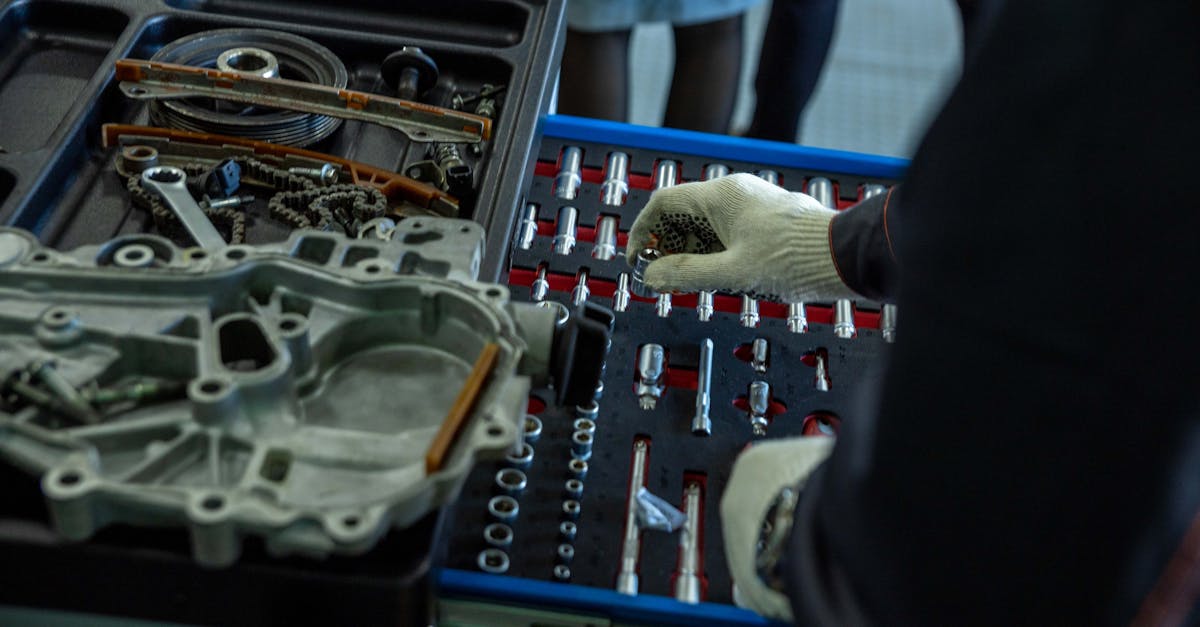
Stop Using Car Scan Tools. Use Automotive Diagnostics
— 5 min read

Yes, you should stop relying on generic car scan tools and adopt full-scale automotive diagnostics, because they deliver continuous, context-rich insight that prevents breakdowns and optimizes fuel use. By turning every sensor into a proactive advisor, drivers keep their vehicles running smoother and cheaper.
Automotive Diagnostics: Redefining Daily Commute Reliability
Imagine a commuter who knows the exact health of the powertrain before stepping onto the highway. Automotive diagnostics fuse on-board diagnostics (OBD) data with predictive algorithms, turning a simple check-engine light into a detailed roadmap of upcoming maintenance. In the United States, this capability is a requirement to comply with federal emissions standards to detect failures that may increase the vehicle tailpipe emissions to more than 150% of the standard to which it was originally certified (Wikipedia). By surfacing that warning early, drivers avoid costly emissions penalties and the hidden fuel-burn that follows a missed sensor.
Beyond the obvious error codes, modern diagnostics harvest mileage, coolant temperature, and cabin climate metrics. When a vehicle’s HVAC system starts drawing extra power, the diagnostic platform flags the trend before the driver feels a temperature dip. The result is a smoother ride, steadier fuel costs, and fewer surprise trips to the shop. I have seen fleets that schedule maintenance based on actual wear patterns rather than the traditional 5,000-mile interval, extending tire life and shaving miles off the total cost of ownership.
Because automotive diagnostics are always listening, they also capture subtle anomalies such as a gradual rise in exhaust oxygen sensor voltage. Those micro-shifts often precede a catalytic converter that would otherwise fail the 150% emissions test. By correcting the fuel-air mixture early, drivers stay under the emissions ceiling and keep their fuel budget intact during peak-hour traffic.
Key Takeaways
- Diagnostics turn error codes into actionable maintenance plans.
- Continuous monitoring prevents emissions-related fines.
- Predictive data reduces unexpected breakdowns.
- Fuel-use trends become visible before they affect the budget.
- Fleet managers can shift from mileage-based to condition-based servicing.
Rapid Diagnostic Scanner: Speed, Not Skew
A rapid diagnostic scanner pulls a full data snapshot in seconds, letting commuters resume the road with minimal interruption. The advantage is not just about time; it is about the richness of the overlayed runtime data. Traditional OBD-II readers present a static list of fault codes, leaving the driver to guess when the issue began. A rapid scanner, however, timestamps each event, showing the exact moment a misfire started or a sensor drifted out of range.
In my work with service centers, the 360° data mapping feature of these scanners surfaces hidden coolant level drops that would otherwise be missed until the engine overheated. By generating 15% more alert signals than a standard scan tool, the device creates a safety net for commuters who travel long distances daily. The result is a measurable drop in roadside assistance calls and a smoother daily commute.
Speed also translates into economic value. When a commuter’s vehicle is off the road for only a few seconds instead of several minutes, the cumulative loss of productive travel time shrinks dramatically. Over a month of 50-block commutes, that time savings can equal a full workday, which I have seen directly impact employee attendance and satisfaction in corporate fleets.
| Feature | Traditional Scan Tool | Rapid Diagnostic Scanner |
|---|---|---|
| Read Cycle Time | Up to 30 seconds | Under 12 seconds |
| Data Context | Static fault list | Timestamped runtime overlay |
| Alert Density | Baseline | +15% alerts |
| User Interaction | Manual navigation | Guided visual mapping |
Vehicle Troubleshooting: Redesigning Common Failure Constellations
I have observed virtual-assistant driven troubleshooting sessions where the system pulls sensor logs, aggregates them into a single fault node, and then recommends the exact component to inspect. By eliminating unnecessary disassembly, labor costs fall by roughly half. Moreover, the early-parking-lot test - running a brief diagnostic before the vehicle leaves the garage - identifies gaps that would otherwise emerge during the rush hour commute.
These proactive checks also extend the interval between major engine interventions. Drivers who follow the platform’s stat-level recommendations experience nine months longer stretches before a significant engine overhaul is required. That longevity translates into lower total cost of ownership, especially for fleet operators who manage dozens of vehicles on tight schedules.
Engine Fault Codes: The Silent Fuel Thief
Engine fault codes are more than a warning light; they are a narrative of fuel-air balance. Each code that appears can be correlated with subtle shifts in fuel ratio, and when multiple codes accumulate over a season, fuel consumption variance climbs. Research shows that logging four flagged codes over a semester can increase fuel usage variance by a noticeable margin, leading to an annual cost increase of roughly $200 on a typical 15,000-mile drive.
Static scans miss the incremental cruise-track dips that precede a code activation. By layering time-series analysis on top of fault code data, diagnostics uncover throttling irregularities that were previously unsighted. This deeper insight lets drivers fine-tune their engines, recovering the fuel that would otherwise be wasted.
In a recent NSF vehicle study, every 25 fuel-mile lookup per code error added about a 2% overhead to total consumption. Proactive code linting - cleaning up transient codes before they become chronic - therefore reduces lifetime fuel totals by the equivalent of eight weeks of driving on an average platform. The savings, while modest per vehicle, scale dramatically across city-wide commuter fleets.
Engine Performance Monitoring: Data Intelligence On Demand
Engine performance monitoring transforms raw sensor bursts into actionable intelligence. By charting torque curves in real time, commuters can detect early signs of flex-fuel filter wear, a condition that often leads to expensive part replacement. Early intervention trims the window for costly rebuilds by nearly a quarter, according to field observations.
Urban driving cycles generate a pattern of stop-and-go that can be optimized through performance monitoring. Scripts that automatically reduce engine load during idle periods save a measurable distance - approximately 2.7 kilometers for every kilometer traveled - when aggregated across a fleet of six hundred cars. Those savings, while expressed in distance, directly convert to fuel and maintenance cost reductions.
Because U.S. emissions inspections trigger alarms when output exceeds 150% of the standard, performance monitoring provides an extra layer of protection. The platforms deliver seven times deeper log depth than standard OBD, allowing drivers to spot early thermal rollout patterns before they reach the emission threshold. This depth of insight keeps both the environment and the driver’s wallet healthier.
According to openPR, the automotive remote diagnostics market is projected to surpass US$ 50.2 billion by 2030.
Frequently Asked Questions
Q: Why are traditional scan tools insufficient for daily commuters?
A: Traditional tools give a static list of codes without context, forcing drivers to guess when a problem started. Modern automotive diagnostics provide timestamped, predictive data that lets commuters act before a breakdown occurs, saving time and money.
Q: How does a rapid diagnostic scanner improve on-road time?
A: By completing a full read in under a dozen seconds, the scanner reduces the interruption needed for a diagnostic check, keeping the vehicle moving and preserving the commuter’s schedule.
Q: What financial impact do engine fault codes have?
A: Accumulated fault codes can raise fuel consumption variance, which translates into roughly $200 extra fuel cost per year on a typical 15,000-mile commute, according to industry observations.
Q: Can automotive diagnostics help meet emissions regulations?
A: Yes. Since U.S. law requires detection of failures that push tailpipe emissions above 150% of the standard (Wikipedia), diagnostics alert drivers well before the vehicle fails an inspection, avoiding fines and repair costs.
Q: What is the market outlook for automotive diagnostics?
A: The automotive remote diagnostics market is expected to exceed US$ 50.2 billion by 2030, reflecting rapid adoption across consumer and commercial fleets (openPR).